All Seasons Appraisals

Understanding the Cost of Home Appraisals

Copy of Google Real Estate Appraisal Process (1)

When it comes to buying or selling property, understanding the cost of home appraisals is crucial. Home appraisals can be overwhelming, especially if you’re unfamiliar with the process. I’m here to break down the factors that influence the cost of your home appraisal in Cleveland, Ohio, and the surrounding areas.


Factors Influencing Appraisal Costs


One of the first considerations when determining the cost of a home appraisal is the type of property being assessed. Whether you own a single-family home, a multi-family residence, or a condominium, the appraisal pricing will differ. This is primarily because each property type requires different forms and assessments that can vary in complexity and effort.


1️⃣Type of Property: For instance, appraising a single-family home typically involves less complexity than evaluating a multi-family unit or a condominium. The latter often requires additional data collection and analysis, contributing to higher costs.


2️⃣ Litigation and Legal Matters: If your property appraisal involves litigation—such as needing to testify or make an appearance at the board of revisions—this can significantly affect the cost. These scenarios require additional work and time, thus increasing the overall appraisal fee.


3️⃣ Special Requirements: If you’re dealing with an income-producing property, you might also require assessments of comparable rentals. This additional layer of complexity will also play a role in determining the final appraisal cost.


4️⃣ Size and Complexity: The size of the property and its specific characteristics are also essential factors. For example, appraising an 8,000 square foot house situated on five acres is considerably more complex and would naturally incur a higher appraisal fee than a smaller, less complicated property.


Why Working with Professionals Matters


Navigating the appraisal process can be daunting, but having a knowledgeable team at your side makes all the difference. At All Seasons Appraisals, we are dedicated to providing clear communication and transparent pricing. If you have any questions regarding appraisals or need assistance in determining the value of your property, don’t hesitate to reach out. We’re here to help guide you through this important process.


Get in Touch


For personalized assistance and more detailed information about your specific appraisal needs, please get in touch with us. We look forward to assisting you with any appraisal-related questions you may have.

📱Gregg Micale  

Certified and Licensed Real Estate Appraiser  

(216) 314-4843  

📱Jim Siebert  

Licensed Real Estate Appraiser  

(216) 299-3172  

September 8th, 2022 6:23 AM

If you’re like most people, you probably don’t get enough sleep. And if you don’t get enough sleep, you’re not alone.
According to the National Sleep Foundation, more than one-third of Americans do not get the recommended seven to eight hours of sleep per night.

There are a number of reasons why people don’t get enough sleep. Some people have trouble falling asleep, others have trouble staying asleep, and some people have both problems.

But whatever the reason, there are things you can do to get better sleep.

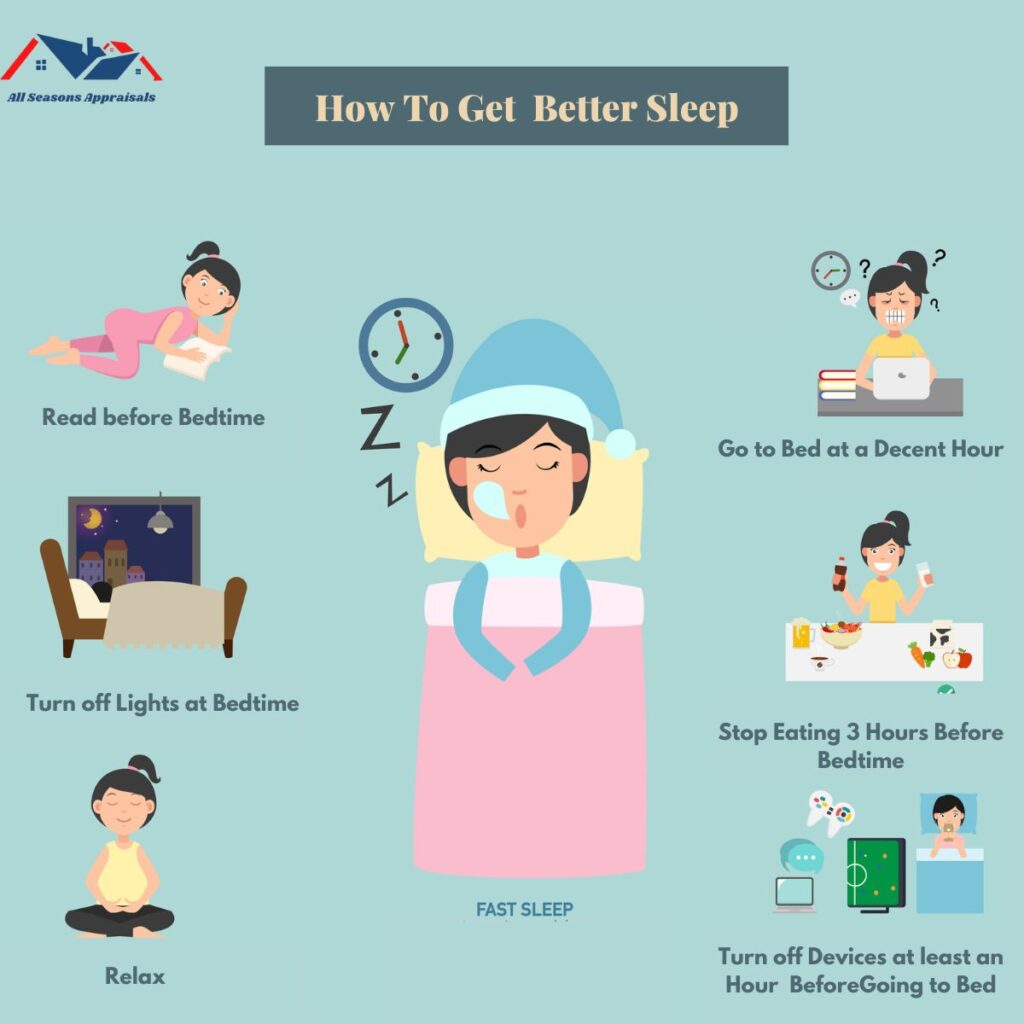
Here are some tips:

1.) Create a bedtime routine: A bedtime routine can help signal to your body that it’s time to wind down and go to sleep.

Start by choosing a bedtime and sticking to it as much as possible. Then, create a pre-bed routine that includes relaxing activities such as reading, taking a bath or shower, or doing light stretching.

Doing the same thing every night will help train your body to know when it’s time to sleep.

2.) Avoid caffeine before bed: Caffeine is a stimulant, so it’s not surprising that it can make it harder to fall asleep.

If you’re trying to get better sleep, avoid caffeine in the evening and try to limit your intake earlier in the day.

3.) Cut down on alcohol before bed: Alcohol may make you feel sleepy at first, but it can actually disrupt your sleep later in the night.

If you’re trying to get better sleep, limit your alcohol intake in the evening and try to avoid drinking close to bedtime.

4.) Get some exercise: Exercise can help improve your sleep by reducing stress and anxiety and increasing the release of endorphins, which can make you feel good and help you relax.

But avoid exercising too close to bedtime, as this can actually make it harder to fall asleep.

5.) Make sure your bedroom is dark and quiet: A dark and quiet bedroom is more conducive to sleep than a bright and noisy one.

If you’re having trouble sleeping, try using blackout curtains or an eye mask to block out light, and use earplugs or white noise to reduce noise.

6.) Make sure your bedroom is cool: A cooler temperature can actually help you sleep better.

If you’re having trouble sleeping, try turning down the thermostat to create a more comfortable environment for sleep.

7.) Practice relaxation techniques: Relaxation techniques such as deep breathing or progressive muscle relaxation can help reduce stress and promote sleep.

If you’re struggling to get enough sleep, don’t despair. There are things you can do to improve your sleep habits and get the rest you need. Try some of these tips and see what works for you.